What does too much refrigerant do to a home AC?
An air conditioner is charged to a number. Not roughly, not by feel, to a number the manufacturer prints on the data plate and adjusts for the length of your line set. Put more in than that and the extra liquid has nowhere useful to go, so it stacks up in the bottom of the condenser and takes away the space the system needs to reject heat.
From there it cascades. Head pressure climbs. Discharge temperature climbs with it. The compressor works harder against a higher pressure to move less refrigerant, so you pay more on the electric bill for less cold air. And in a bad overcharge, liquid can make it back to the compressor, which is the part you genuinely do not want to replace.
Here is what that looks like from where you are standing, and from where I am standing with gauges on it.
- The house cools slowly, or it stops keeping up entirely on the hottest afternoons.
- The outdoor unit runs hot and loud, and the electric bill runs higher than last summer for the same weather.
- Sometimes the unit shuts itself off on a high pressure safety and restarts a while later.
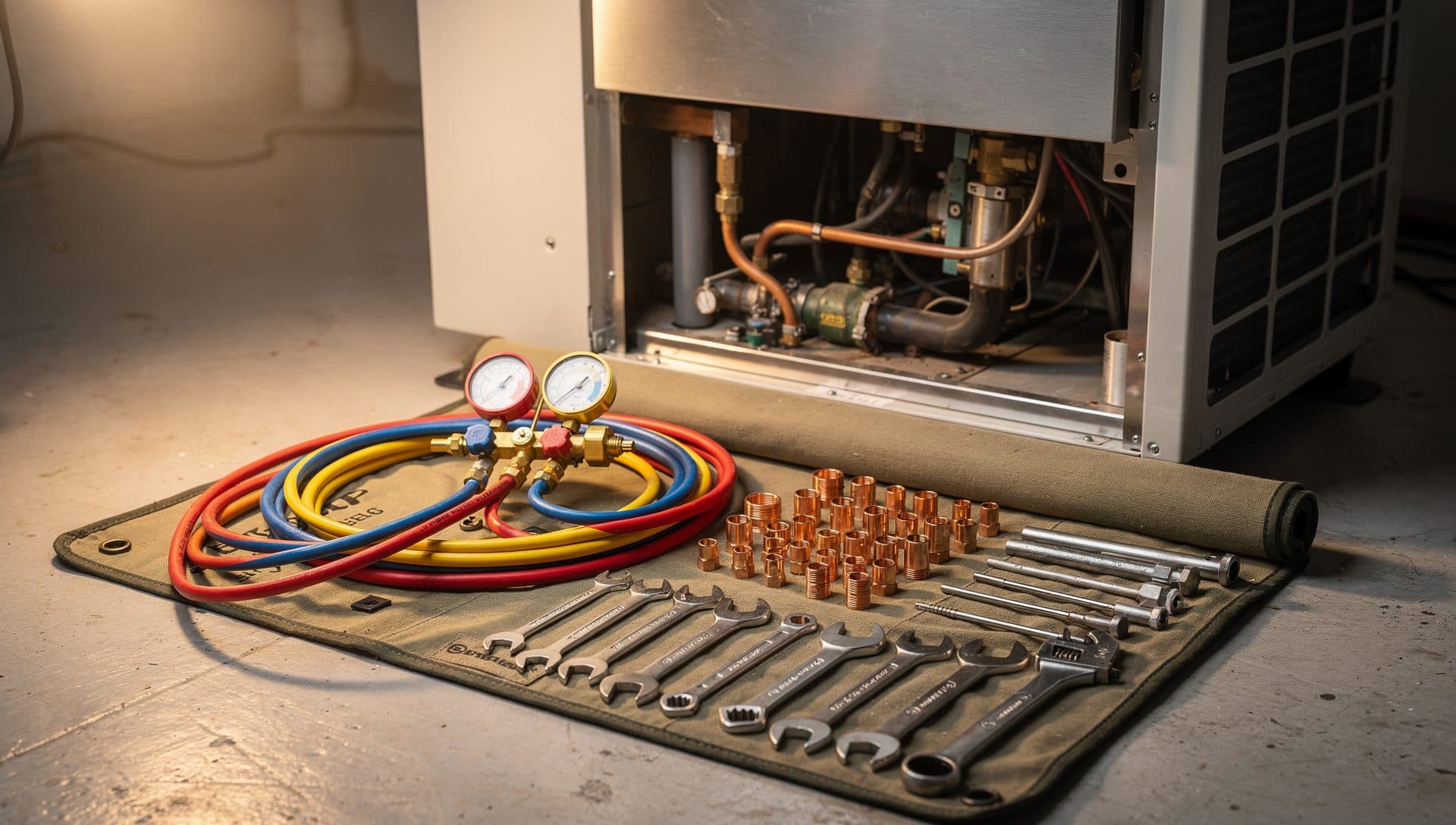
- On my gauges, high head pressure and high subcooling together. Subcooling is the reading that tells me how much refrigerant is in the system, and a high one is the fingerprint of an overcharge.
The second opinion: your system is fine, sir
July 17th of this year, New Hampshire. The homeowner had already had a company out. They were there four or five hours and told him the evaporator was flooded with refrigerant. The number he was looking at next was a full system replacement.
He wanted a second opinion. He had heard from somebody that I am the HVAC wizard, which is a title I did not give myself and am not going to hand back.
So the wizard pulls up, puts gauges on it, and tells him: your system is fine, sir. You have too much refrigerant in it.
Do I know what the other company did? No. Do I care? My job is the machine in front of me, and that machine was telling me exactly one thing. It was overcharged, and everything else about it was running.
I recovered the excess refrigerant into a recovery cylinder, which is what the law requires, because venting it is prohibited under Section 608 of the Clean Air Act. Then I weighed in the factory charge for that system and that line set. Not a guess, not a top off. The number on the plate.
Why a flooded evaporator is a symptom, not a diagnosis
This is the part I want you to take away from this article, because it is the difference between a $650 afternoon and a replacement quote.
Low superheat has more than one cause. Too much refrigerant is one. Too little airflow across the coil is another, and it produces nearly the same reading. If air is not moving across the evaporator, there is not enough heat there to boil the refrigerant off, so liquid keeps traveling exactly the way an overcharge would send it.
John Tomczyk, HVACR professor emeritus at Ferris State University and coauthor of Refrigeration and Air Conditioning Technology, wrote it plainly in the ACHR News in April 2020: technicians often see low superheat and automatically think the system is overcharged, but the technician must also look at the system's condenser subcooling and evaporator pressure before making that call. Low or no superheat, he wrote, does not necessarily mean an overcharged system.
Subcooling is what separates the two. Low superheat with high subcooling points at an overcharge. Low superheat with normal subcooling points at airflow or the metering device. HVAC School makes the same point from the other direction in its residential diagnosis guide: low airflow and dirty coils can fake both an undercharge and an overcharge, so airflow gets confirmed before any charging hose gets connected.
Why was one floor cooling and the other one not?
With the charge corrected I went to check the house, which is the part people skip. Pressures at the equipment are not the job. Comfort in the rooms is the job.
Second floor was working great. Cold air, good volume. I went down to the first floor and there was barely anything coming out of the registers.
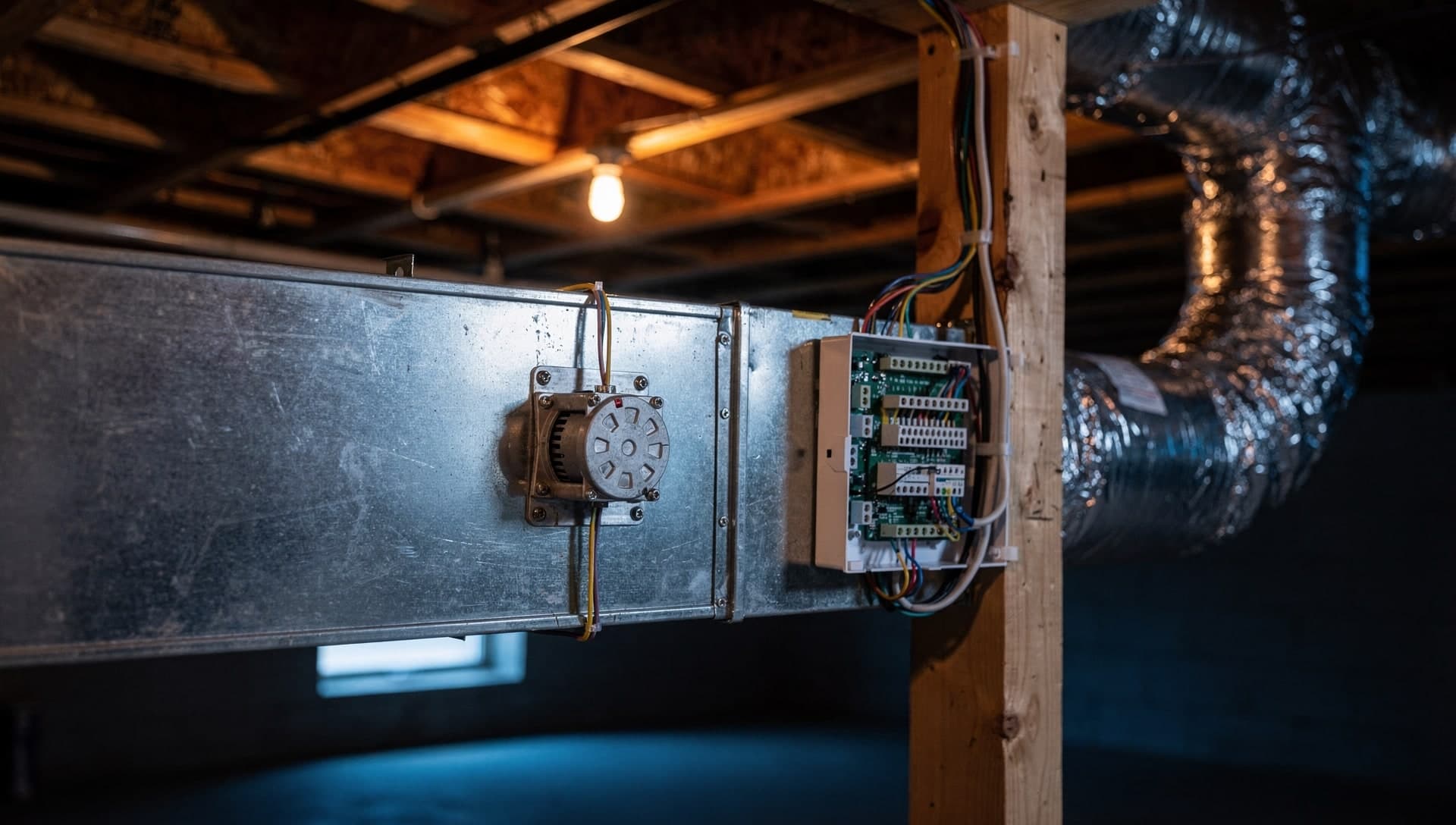
That house is zoned, so I went downstairs and looked at the zone board. The zone serving the first floor was closed. The damper for that half of the house was sitting shut, and it had been shut while everybody was trying to figure out what was wrong with the equipment.
That was almost certainly problem number one, and it explains the reading the whole story started with. A closed damper takes airflow away from the coil. Less airflow means less heat load. Less heat load means the refrigerant does not fully boil off. That is a flooded evaporator, produced by a duct problem rather than a refrigerant problem. Tomczyk describes that same mechanism directly: reduced airflow across the coil leaves refrigerant liquid, and that liquid can travel past the evaporator toward the compressor.
I opened the damper. Full airflow on both floors, pressures settled where they belong, and the system was back in business.
| What I found | How it showed up | What it actually took |
|---|---|---|
| Overcharge of refrigerant | High head pressure with high subcooling on the gauges | Recover the excess, weigh in the factory charge for the system and line set |
| First floor zone damper closed | Second floor cooling normally, almost no air at the first floor registers | Open the damper and confirm airflow at the registers on both floors |
| The evaporator reading the first visit reported | Low superheat, described as the evaporator being flooded | Explained by the two faults above, so nothing needed replacing |
What too much refrigerant costs you if nobody catches it
An overcharge is not dramatic. That is the problem with it. The house still cools, sort of, so it can run that way for a whole season while it quietly costs you money and life.
Tomczyk put the consequence bluntly in the ACHR News in December 2021: inexperienced technicians tend to add refrigerant to a troubled system to remedy a problem, so many systems are running with an overcharge, and those systems run very inefficiently and often end up with more serious overheating problems in the near future. In a severe overcharge, he notes, liquid can reach the suction valves or the crankcase, and that causes compressor damage and eventually failure.
So the machine that gets condemned next summer for a dead compressor sometimes died of something that took twenty minutes and a recovery cylinder to prevent.
$650 versus a new system
That homeowner was getting ready to spend the kind of money you move out of savings. Around New England a full system replacement generally runs $8,000 to $16,000, according to ConsumerAffairs' Boston market guide from May 2026. His afternoon came to $650.
| Path | Typical range | Source |
|---|---|---|
| Diagnostic or service call fee | $95 to $195 | ConsumerAffairs, Boston, May 2026 |
| Refrigerant leak repair and recharge | $425 to $1,250 | ConsumerAffairs, Boston, May 2026 |
| Zone damper motor replacement, if one is actually bad | $250 to $450, average $350 | Angi, 2026 data |
| Full system replacement | $8,000 to $16,000 | ConsumerAffairs, Boston, May 2026 |
| What this call actually came to | $650 | TJM Climate Control, July 17 2026 |
Worth saying plainly, because I am not interested in selling you a fairy tale: his damper was closed, not broken. Opening it was free. If a damper motor has genuinely failed, that is a real part with a real price, and Angi puts the 2026 range at $250 to $450 with an average around $350. Either way, it is a repair, and it is nowhere near a replacement.
Sometimes replacement genuinely is the right call. A cracked heat exchanger, a dead compressor in a system that is old enough to be on borrowed time, a machine that needs more repair than it is worth. Those are real, and I will tell you when you are looking at one. This was not one.
How do I get a real second opinion on an HVAC quote?
You do not need to know the trade to tell a diagnosis from a guess. You need four questions, and they cost you nothing.
- What did you measure, and what were the numbers? A charge conclusion should come with subcooling and superheat readings, not an impression.
- Did you check airflow before you touched the refrigerant? Filter, coil, blower, and on a zoned house, every damper. Airflow problems imitate refrigerant problems.
- Is this the cause or the symptom? A flooded evaporator is a reading. Ask what made it read that way.
- What is the repair path, and what does it cost, before we talk about replacing anything? Get the number for fixing it in writing next to the number for replacing it.
If those answers come back specific, you are probably in good hands. If they come back vague and the only path offered is a new system, a second opinion is worth an afternoon.
How I handle it
I measure before I conclude, I check the house and not just the equipment, and I tell you which reading led me where. When a repair will get you there, I quote the repair. When the system is genuinely finished, I will show you why and put that number in writing too.
If somebody told you that you need a new system and your gut says get another set of eyes on it, call TJM Climate Control at 603-475-9027 and I will put gauges on it and tell you what it actually says. From Kingston out to Salem and Derry, and across the line into Methuen and Haverhill.